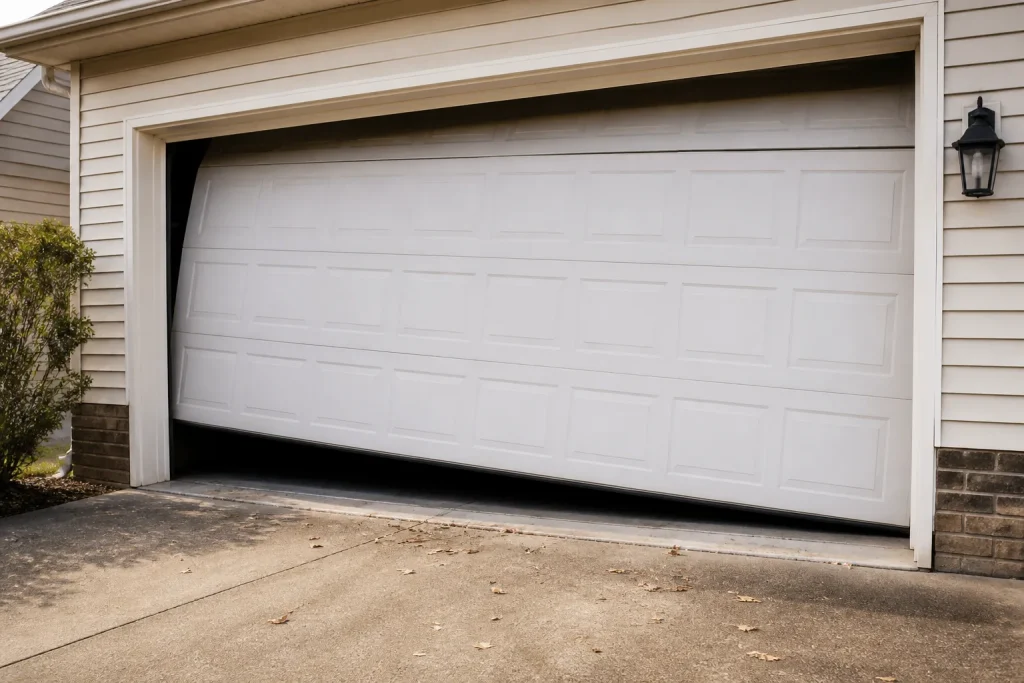
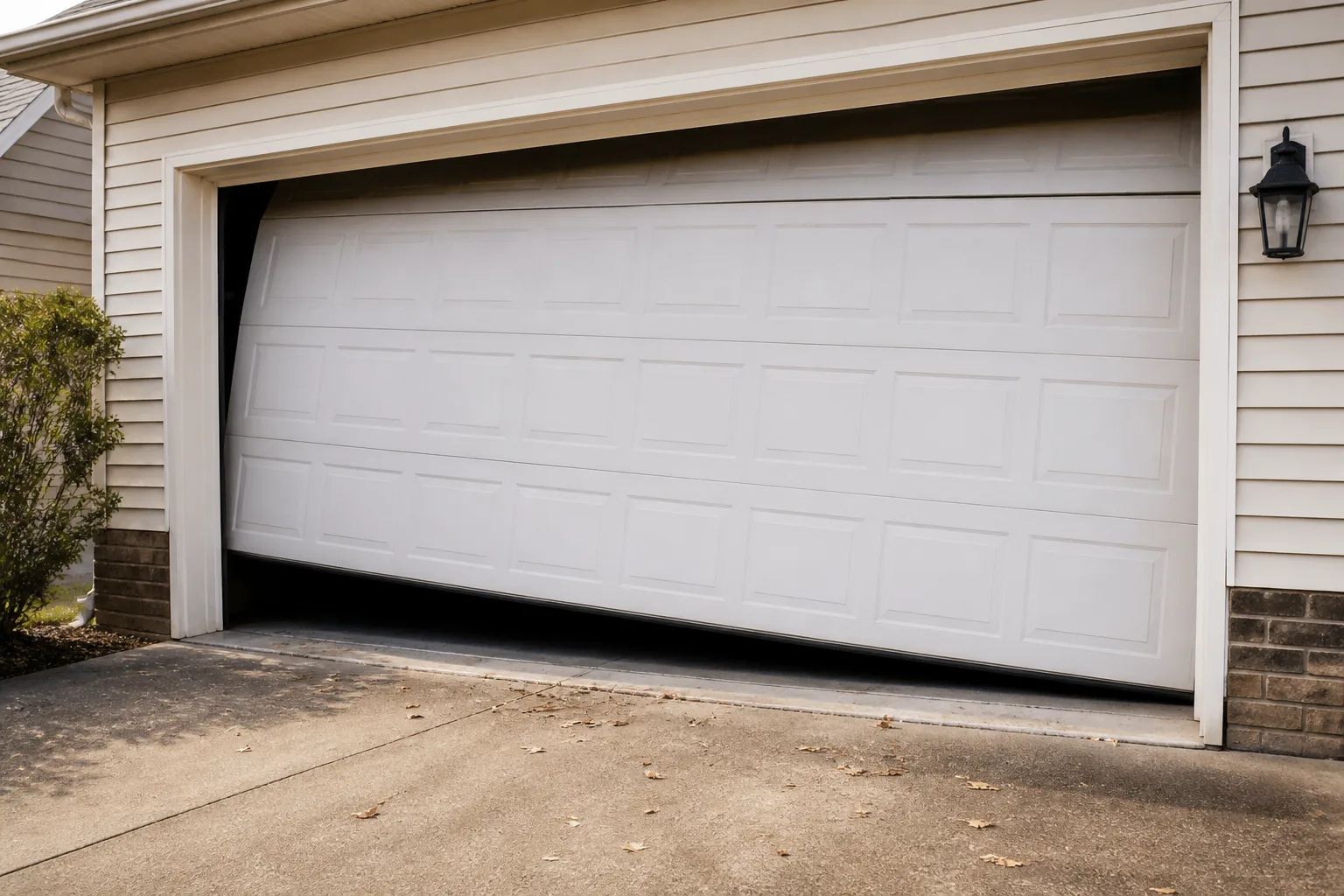
Top Signs You Need Garage Door Service – Don’t Ignore These
A garage door that takes two seconds longer to open than it did six months ago isn’t “just getting older.” It’s a motor working harder than it should, and that extra strain eats into the life of every part it touches – the opener’s gears, the drive system, the springs, the rollers. Most homeowners wait until something breaks before they call anyone. The problem with that math is simple: a small adjustment caught early is far cheaper than a snapped spring, a stripped opener gear, or a door that won’t budge. Of all the moving parts in your house, the garage door is the biggest, and it deserves a closer look than most people give it. If you’d rather not poke around the tracks yourself, call (844) 440-7065 and we’ll look at it for you.
Key Takeaways
- Time your door’s full cycle. If it’s slower than it used to be, that’s a signal worth acting on.
- Cold-weather noise and year-round noise point to two different problems, and they get fixed differently.
- Cables take 60 seconds to inspect. Fraying means stop using the door.
- A door that reverses before it hits the floor isn’t always a sensor problem.
- Bottom seal gaps let Fairfield’s freeze-thaw weather work its way into your garage all year.
What does the slow-open test tell you about your opener?
The slow-open test is a simple way to measure strain on your opener before it becomes a failure. Time your door from fully closed to fully open, and write down the number. Do it a few days in a row. If the door consistently takes a second or two longer than it did six months ago, the motor is compensating for something – a worn drive gear on a chain or belt, a roller that’s dragging, a hinge that’s stiff, or a spring that’s lost some of its lift. The opener doesn’t get tired. The parts around it do, and the motor just works harder to move them.
This matters because an opener running under extra load shortens the life of the drive system and the motor itself. It’s the difference between replacing a roller or a hinge and replacing the whole unit. On modern openers – LiftMaster and Chamberlain being the ones we see most, with Genie close behind – the unit doesn’t always show a warning code when it’s straining. It just quietly does more work than it should until it stops, and most people find out when the door is stuck open on a cold morning.
If the door also pauses or stumbles opening, stop running it and get it checked. A dragging door puts stress on a spring that’s already under tension, and springs are the most dangerous part of the system. We’d rather test the opener and lift for you than have you find out the hard way.
Why is your door noisy in cold weather?
A door that’s loud in January and quiet again by April has a weather-related cause, and it’s usually harmless to the mechanism. A door that’s loud in July is telling you something different. The two noises come from different places, and treating them the same wastes money on the wrong fix.
Cold-weather noise is usually the rollers and hinges. Metal contracts when it gets cold, and the lubricant on the moving parts thickens. A stiff roller on a cold morning makes a squeal or a groan that fades as the day warms up and comes back the next cold morning. It’s a cue to lubricate the rollers and hinges, not a sign that something is about to fail. In Fairfield, where winter nights routinely land below freezing, this is normal behavior for an ungreased door.
Year-round noise is a different animal. A repeated metal-on-metal rattle from above points to loose track brackets or a sagging section. A grinding sound from the opener itself is a motor or gear issue. A scraping noise along the door face usually means a bent panel dragging on the track. Each one has a separate fix, and skipping the diagnosis tends to buy the wrong part. The good news is that most year-round noises trace to something a technician finds in minutes, not a full replacement.
What does a frayed cable look like, and when should you stop using the door?
A frayed cable is a stop-now problem. It’s one of the few garage door issues where the right move is to leave the door closed and call someone, because a snapped cable can whip free under tension and let the door drop. You can check the cables yourself in about 60 seconds without touching anything. Look at two spots: the cable winding around the drum above each side of the door, and the cable at the bottom bracket where it anchors.
Here’s what to look for:
- At the drum: the cable should wind in neat, even coils. If you see loose layering, a cable climbing over itself, or coils that look cross-stacked rather than stepped, that’s a sign the drum is out of sync or the cable has jumped.
- At the bottom bracket: look for individual strands of wire sticking out at an angle, a fuzzy look to the cable, kinks, or rust spots that have eaten into the strands. Any of those mean the cable is weakened and shouldn’t be trusted.
- Along the run: a cable that droops below the track, or has slack where it should be taut, is another warning.
Do not try to adjust, tighten, or rewind a cable yourself. They’re under heavy tension and paired with springs that store deadly force. If you spot fraying in Fairfield, close the door, keep it closed, and have a technician look at it. We handle cables and springs so you don’t have to, and it’s the one part of the system we’d never ask you to touch.
Why does your door reverse before it hits the ground?
A door that reverses before touching the floor isn’t always a sensor problem, and assuming it is leads many homeowners to buy parts they don’t need. The safety sensors at the base of the door track do one job: they stop the door if something breaks their beam. But a door can also reverse because the opener’s travel limits are set wrong, because there’s too much down-force resistance in the tracks, or because the door is binding on a warped panel. Replacing sensors when the real problem is a limit setting just moves the problem to the next visit.
Homeowners can narrow it down safely with the door disconnected from the opener – pulled into manual mode – and lifted and lowered by hand. If the door is hard to move by hand, the problem is mechanical: a tight track, a stiff hinge, a warped panel. If it moves smoothly by hand and only reverses on the opener, it’s likely a limit or resistance setting. On LiftMaster and Chamberlain units the limit adjustment is a dial or an up/down arrow combo, and sometimes a quick reset to factory travel fixes it without any new parts.
Don’t override the safety settings to force the door down. That’s how people end up with a crushed object or a damaged door panel. If a reset doesn’t sort it, that’s a good moment to call someone who resets limits and travel on these brands routinely.
The gap test: why Fairfield’s freeze-thaw cycles chew through bottom seals
Fairfield’s winter cycle of freezing nights and thawing days works the bottom seal harder than most homeowners expect. Water seeps under a worn seal in the afternoon, freezes overnight, and expands. Every freeze-thaw cycle stretches the rubber a little more. By spring the seal that was tight in October may be cracked, compressed, or pulling away from its retainer at the corners. The gap test takes a minute and tells you a lot.
Close the door fully and look at the line where the seal meets the floor. You shouldn’t see daylight anywhere along that line. Slide a coin under the door in a few spots – the seal should press into the floor, not perch on it. Run your hand along the bottom (door open, door locked, don’t put your fingers in moving parts) and feel for cracks, hard spots, or places where the rubber has pulled away. If you see light, feel draft, or the seal is brittle, it’s time to replace it. A bad seal lets in water that damages the door’s bottom steel, invites mice, and drives up heating loss in Fairfield winters. It’s an inexpensive fix that heads off expensive damage.
When to call a pro
You can check a bottom seal, time a door cycle, and eyeball the cables yourself. You should not adjust springs, tangle with a cable under tension, or keep running a door that reverses randomly. If you’ve spotted any of the signals above, get a trained technician to look at it before it gets worse. Our team travels across Fairfield and works with the full range of brands – Clopay, Amarr, and Wayne Dalton among them – so there’s no scrambling to find someone who knows your door. From opener error codes to full door replacements, if you don’t want to DIY the diagnosis, we can take it from here.
Related services in Fairfield: if you’ve confirmed a worn opener or a failing door, look at garage door opener repair or a full garage door installation when the panel and hardware are past repair.
The Bottom Line
Early detection is the whole game with garage doors. A door that’s slightly slower, slightly louder, or dragging a corner of its bottom seal is telling you something before it fails. Catching those signs early keeps the repair small and keeps the door running through every season in Fairfield. Most “warning sign” lists only list the obvious failures – snapped springs, dead openers – and skip the early cues that save people real money.
If you’re in Fairfield and want a hands-on diagnosis, Garage Door Repair Fairfield Pros offers free estimates and can work on virtually any system you’ve got. Call (844) 440-7065 today. Same door, same day when it’s urgent.
Ready to schedule? Reach out for expert garage door repair and get a straight answer before anything gets worse.
Frequently Asked Questions
Most doors benefit from a tune-up once a year – a check of the springs, cables, rollers, hinges, and opener settings. If your door runs heavy (a double-wide, insulated, or older door), you’ll get more out of checking it about every six months. Regular service is also when a technician catches the subtle stuff: a cable beginning to fray, a roller flat-spotting, a limit set slightly off. Call (844) 440-7065 in Fairfield if you want a free estimate on a checkup.
Not always. Seasonal noise in cold weather is usually just stiff rollers and thick lubricant, and oiling the moving parts usually quiets it. Year-round grinding, scraping, or metal-on-metal rattling is what to pay attention to – that’s usually a loose bracket, a bent section, or an opener problem. If the noise comes with hesitation, sticking, or a door that won’t move smoothly by hand, get it looked at.
No, and we’d strongly advise against it. Cables sit under the same high tension as springs, and a cable that slips can drop the door or whip free. If you see strands sticking out or a kinked cable in Fairfield, leave the door closed and call a trained technician. We handle cables and springs so you don’t have to. Call (844) 440-7065 for a free estimate.
Not necessarily. Before buying sensors, rule out travel limits and down-force resistance. Disconnect the opener and lift the door by hand – if it’s hard to move, the problem is mechanical, not the sensors. If it moves smoothly and only reverses on the opener, a limit adjustment or a travel reset usually fixes it. A quick technician visit will tell you which one it is and keep you from paying for parts you don’t need.
Our technicians are equipped to work on LiftMaster, Chamberlain, Genie, Clopay, Amarr, Wayne Dalton, Craftsman, and Raynor systems. For harder-to-find brands, ask when you call and we’ll let you know. Call (844) 440-7065 for a free estimate in Fairfield.
Written by the team at Garage Door Repair Fairfield Pros.
Need Garage Door Help?
Call Garage Door Repair Fairfield Pros - the local pro we connect you with is licensed and insured, here with fast after-hours help in Fairfield.
(844) 440-7065