Last updated November 22, 2026
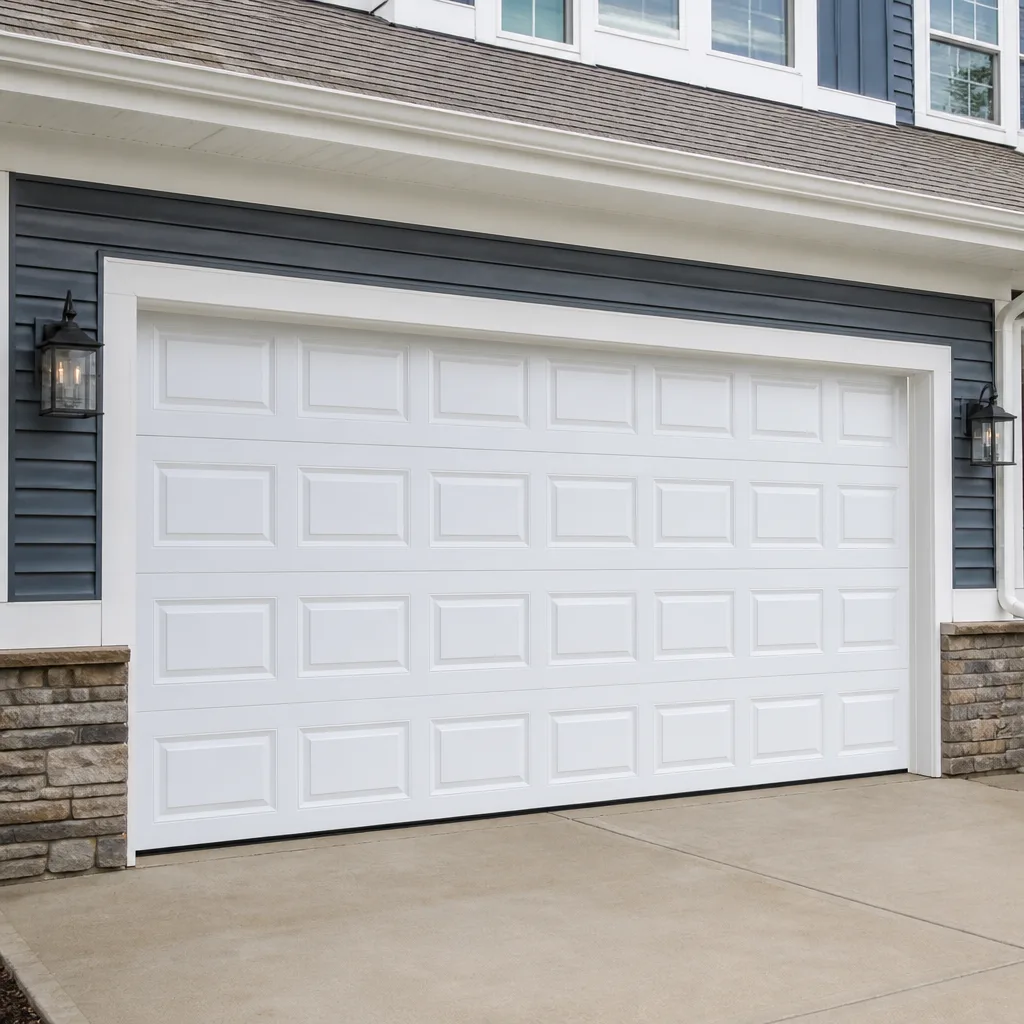 Raised-panel steel
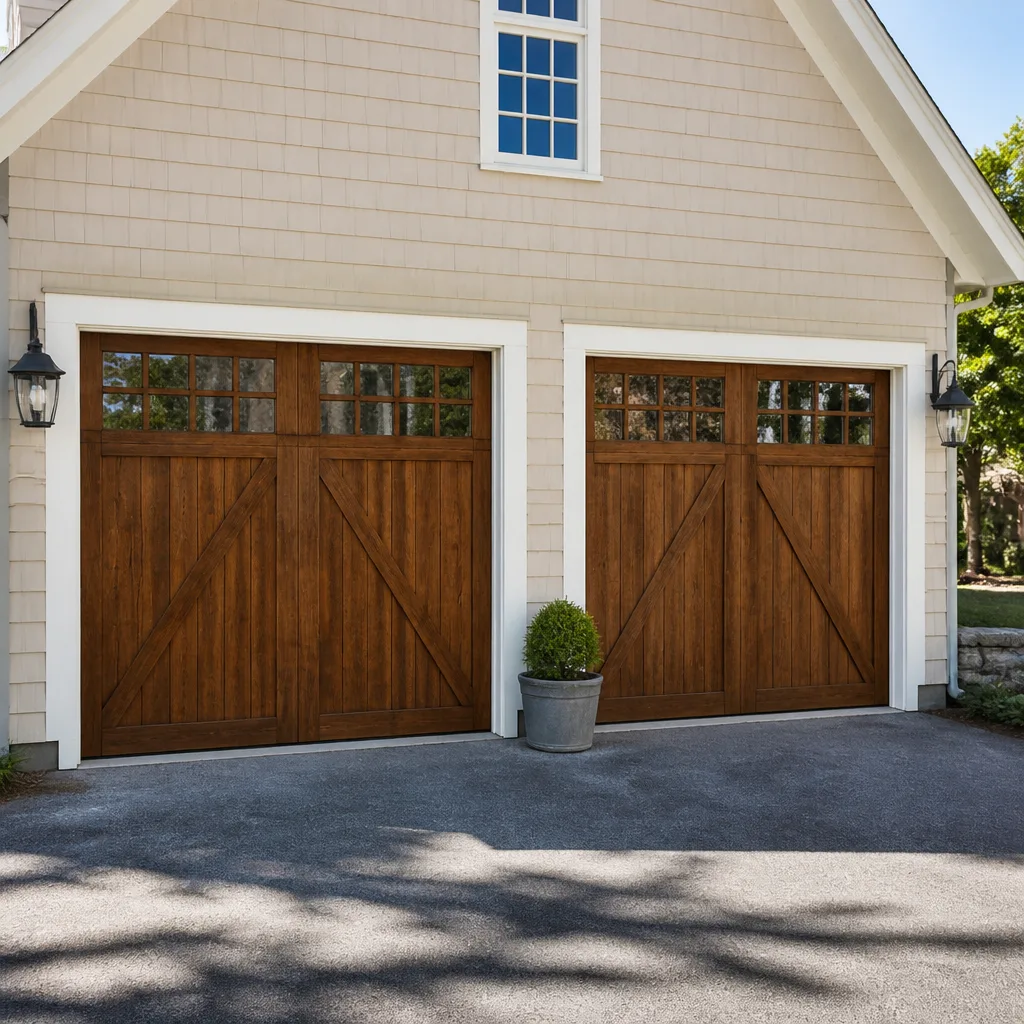 Carriage house
 Modern flush
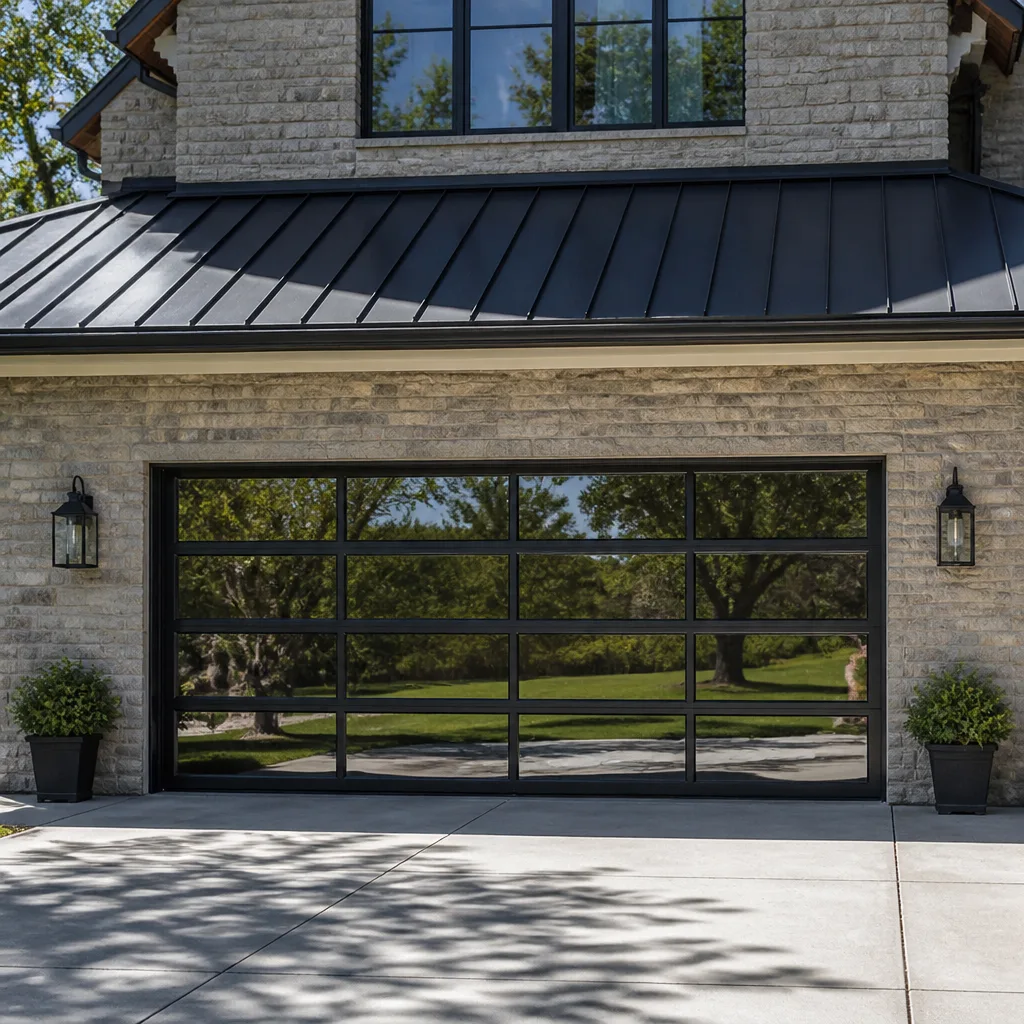 Full-view glass
 LiftMaster openers
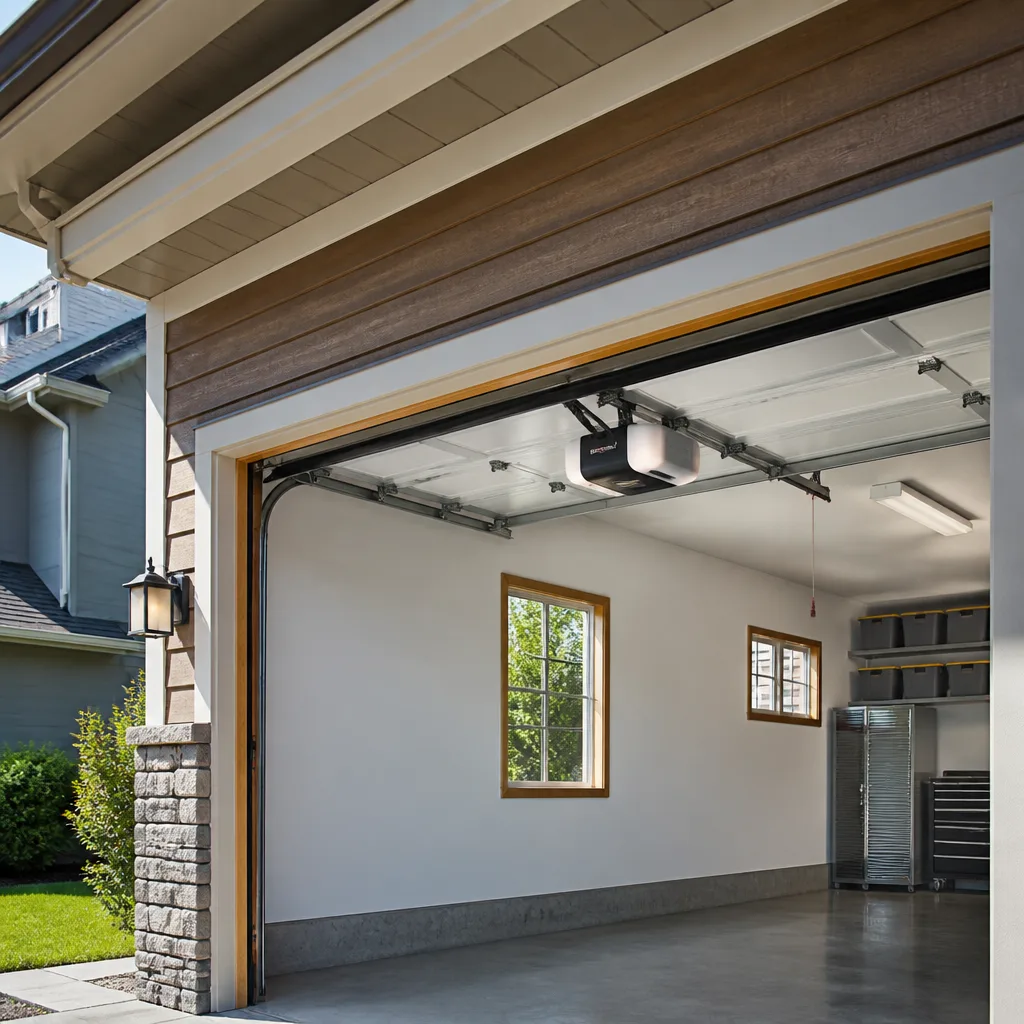 Chamberlain openers
Full 25-point door and opener safety check with every visit - springs, cables, rollers, tracks, and your LiftMaster or Chamberlain opener included
You get a price before we start. It does not change when the pro arrives.
Get your free estimateGarage Door Warning Signs: A Fairfield Homeowner’s Reference Guide
A grinding noise when the door opens could mean you need a $12 can of lubricant, or it could mean a roller is about to shear off a cable drum. The sound alone doesn’t tell you which one. That’s the problem with most garage door advice: it gives you a list of noises and leaves you to guess. What actually separates a cosmetic nuisance from a system that’s hours away from an unsafe failure is the combination of cues happening at the same time. Read the sound, the movement, the springs, and the hardware together, and the door tells you exactly what’s wrong. This guide shows you how to do that, from a Fairfield business that looks at these doors every day.
Quick Answer
Garage door warning signs fall into four categories: unusual noises (grinding, squealing, popping, rattling), visual cues on springs and cables, movement problems (sluggish, jerky, or stopping mid-travel), and hardware that looks loose or bent. Any single sign deserves a look; two or more at once usually means the door should stay closed until a technician inspects it. The signs that mean stop using the door immediately are a broken spring, a frayed or hanging cable, and a door that closes unevenly with a visible gap. In Fairfield, where most garages are attached to the house, that last category matters more than most homeowners realize.
Styles & brands we work with
- Raised-panel steel
- Carriage house
- Modern flush
- Full-view glass
- LiftMaster openers
- Chamberlain openers
Table of Contents
- What Each Garage Door Noise Is Telling You
- Spring and Cable Warning Signs You Can See from a Safe Distance
- Movement Problems: Slow, Jerky, or Stopping Mid-Travel
- The Signs That Mean Stop Using the Door Right Now
- How Warning Signs Change with Door Age
- What Fairfield Seasons Do to a Garage Door
- The Five-Minute Monthly Check
- Why Brand Matters When You Call for Help
What Each Garage Door Noise Is Telling You
Every garage door makes some noise. The question is whether the noise is new, whether it’s getting worse, and what else is happening while you hear it. Isolate the sound, then look at the door’s movement and hardware at the same moment. That combination is what a technician reads in the first thirty seconds of an inspection.
Grinding. Grinding usually comes from metal moving against metal where it shouldn’t. The most common culprits are dry rollers, a torsion tube with worn bearings, or a track that’s out of alignment so the rollers are scraping the edge. Look at the rollers while the door moves: if any of them look dry, flat-spotted, or wobble in the track, that’s your answer. Grinding accompanied by the door pulling to one side points to track alignment rather than lubrication.
Squealing. Squealing is usually friction, and friction is usually the easiest thing on this list to fix. Dry hinges, dry rollers, and a torsion spring that’s lost its lubricant film all squeal. But squealing that starts suddenly and only happens at one point in the door’s travel is different: it often means a roller is binding at a specific track joint. If the squeal is at the same height every time, watch that spot.
Popping. Popping is the one to take seriously. A single loud pop followed by the door refusing to lift usually means a torsion spring has broken. A repeating pop or snap as the door moves can mean a cable is slipping off a drum. Neither is a lubrication issue, and neither should be tested by running the door again.
Rattling. Rattling points to loose hardware: hinge bolts, bracket screws, the opener’s rail, or the door’s panels themselves. It’s rarely dangerous on its own, but loose hardware left alone vibrates other parts loose over time. Tighten what you can reach safely and watch whether the rattle moves.
If a grinding or squealing noise has been building for a while and you’re not sure what’s behind it, this is the point where a professional look saves money: garage door repair covers rollers, tracks, hinges, and the opener’s moving parts in one visit. We work on Chamberlain and Genie systems as readily as older mechanical units, so the diagnosis doesn’t depend on which brand you own.
Spring and Cable Warning Signs You Can See from a Safe Distance
Springs and cables are the parts of a garage door that cause serious injuries, and they’re also the parts you can inspect without touching anything. Stand back, look up, and use a flashlight. You’re looking for shape and alignment, not testing anything with your hands.
On torsion springs (the horizontal spring above the door)
- A visible gap in the coil. A torsion spring should be one continuous coil. A gap of an inch or more means the spring has broken. The door may still lift, especially if there are two springs and one is intact, which is exactly what makes this one deceptive.
- A spring that looks stretched or unwound. Torsion springs should look tight and even. If the coils are separating or the whole spring looks longer than it used to, it’s losing tension.
- Rust streaks or dark residue on the coil. This suggests the spring is worn and working harder than it should.
On extension springs (the springs that run along the tracks)
- Stretched sections. A spring that has stretched noticeably compared to its partner is close to failing.
- Missing safety cables. Extension springs should have a steel cable running through the middle of each spring. If that cable is missing, a spring failure sends metal across the garage. This is a safety issue regardless of the spring’s condition.
On cables
- Fraying. Look for broken strands, a fuzzy appearance, or a cable that’s kinked. Any of these mean the cable is compromised.
- Slack or a cable hanging loose. A cable should be under tension at all times. A slack cable means it’s come off the drum or the spring has failed.
- Cables wound unevenly on the drum. If the cable is piling up on one side of the drum instead of winding in neat layers, the door is out of balance.
We handle springs as a dedicated service because they demand specific tools and specific training. Springs are the most dangerous part of any garage door, and we treat them that way: no homeowner should be adjusting, winding, or removing one. If you see any of the signs above, keep the door closed and call. On spring work in Fairfield, our technicians have up to 10 years of experience and can confirm what you’re seeing within minutes of arriving.
Movement Problems: Slow, Jerky, or Stopping Mid-Travel
How a door moves tells you as much as how it sounds. Watch the full cycle from open to close once, and note exactly where the problem happens. That detail alone narrows the diagnosis considerably.
Slow on the way up
A door that’s noticeably slower going up than coming down is fighting something. The most common causes are a spring that’s lost tension, a door that’s out of balance, or an opener working harder than it should. Test it without the opener: disconnect the door from the opener (the release cord handles this) and lift it halfway by hand. A properly balanced door stays roughly where you leave it. If it drops or needs real effort, the spring or balance is the problem, not the opener.
Jerky descent
A door that shudders or jerks on the way down usually has a track alignment problem, a bent roller, or debris in the track. Run your eye along both tracks while the door moves; a track that’s been knocked out of line at one point will show as a visible kink. This one is often fixable without replacing parts, but the track has to be adjusted rather than forced back into place.
Stopping mid-travel
A door that reverses or stops halfway is usually doing what it’s designed to do: the safety sensors at the bottom of the tracks have detected an obstruction or lost their alignment. Check for anything in the door’s path, then check that the two sensors are facing each other and their indicator lights are on. If the sensors look fine and the door still stops, the problem moves into the opener’s logic board or travel limits, which is a technician’s job. We see this constantly with LiftMaster and Chamberlain openers, and it’s usually a ten-minute diagnosis once we’re on site.
What’s DIY-safe and what isn’t
- Safe to check yourself: sensor alignment, obstructions in the door’s path, a visual look at the tracks, and the balance test with the opener disconnected.
- Safe to fix yourself: cleaning debris out of the tracks, lubricating hinges and rollers with a garage door lubricant, and tightening visible loose bolts on the door panels.
- Not safe to fix yourself: anything involving springs, cables, drums, or the torsion tube. These are under extreme tension and cause serious injuries when handled without training.
- Call a technician: openers that behave erratically after sensor checks, doors that reverse without an obstruction, and any grinding or popping that won’t go away.
The Signs That Mean Stop Using the Door Right Now
Some warning signs let you keep using the door carefully while you book a service visit. Others mean the door should not move again until someone qualified has looked at it. The second category is short, and it’s worth memorizing.
- A broken torsion spring or a stretched extension spring. The door may still lift, sometimes with the opener’s help, but the opener isn’t designed to lift the door’s weight. Running it repeatedly burns out the opener, and a sudden failure with the door in motion can drop it.
- A frayed, kinked, or slack cable. Cables hold the door’s tension in partnership with the springs. A cable failure is a sudden, violent event.
- A door that closes unevenly or leaves a visible gap at the bottom. A door resting unevenly on one side is being held by one spring or one cable. It’s also not sealing, which matters in an attached garage.
- Visible track damage, especially a track bent away from the door. Rollers can jump the track and the door can come down off its track entirely.
- A door that has come off its tracks or is hanging at an angle. Don’t run the opener to “see if it fixes itself.” Power down the opener and call.
The reason this list matters more in Fairfield than in some places: most of the garages here are attached to the house. A garage door that’s left partially open or that fails to seal lets exhaust fumes, including carbon monoxide, migrate into living space. If you ever notice exhaust smell in the house, get everyone out and ventilate before anything else, then have both the door and the vehicle checked. A door that isn’t sealing properly because it’s out of balance is a warning sign that deserves immediate attention, not a wait-and-see.
How Warning Signs Change with Door Age
The same symptom can mean completely different things depending on the door’s age and how it’s been looked after. A grinding noise on a well-maintained door is a lubrication issue. The same noise on a door that’s never been serviced is more likely worn hardware.
On a door around 15 years old
Some wear is expected and not a crisis. Rollers wear flat and develop a rumble. Springs, depending on cycles, may be approaching the end of their life. Paint fades and panels collect small dents. What’s worth attention is a door that’s suddenly harder to lift, one spring that looks different from its partner, and any new noise that has appeared in the last few months. Age alone isn’t a reason to replace a door, but age plus a list of new symptoms usually is a conversation worth having. If you’re weighing repair against replacement, our garage door installation team can walk through what a new Clopay or Amarr door would solve versus what a repair would.
On a poorly maintained door of any age
Neglect produces its own signature. Springs that were never lubricated bind and wear faster. Tracks collect grit and rollers grind against it. Hinges get loose and panels vibrate. A door like this can be five years old and still have more problems than a well-kept fifteen-year-old door. The signs to look for are rust on the springs, visible dirt built up in the tracks, and hardware that’s visibly loose from the top of the door to the bottom. A single service visit usually resets most of it.
On a door that’s been serviced regularly
A maintained door’s warning signs are usually small and early: a slight squeak, a roller that’s starting to look shiny, an opener that’s a little slower than it used to be. These are the easiest problems to fix and the cheapest to catch. Treat any new noise on a well-kept door as worth a call, because it’s probably the only warning you’ll get before something bigger.
What Fairfield Seasons Do to a Garage Door
Fairfield’s weather puts real stress on garage doors, and the seasonal pattern shows up in the warning signs. Ohio’s swings between humid summers and freezing winters are hard on wood and steel alike. Summer humidity swells wood door panels and works its way into wood panel joints; that’s when sticking and binding show up, and when a door that was fine in spring suddenly needs a shoulder to close. Winter brings contraction and lubricant thickening. Metal contracts, which can throw an older track slightly out of alignment and make rollers stick. Cold also makes grease stiff, which is why a door that’s quiet in July can grind in January.
The transition seasons are when most problems turn into visible warning signs. Early spring and late fall are when we’d suggest a homeowner in Fairfield looks at the springs and cables closely, lubricates the moving parts, and checks the door’s balance. Spring rains also bring debris into the tracks, so a quick clean after a stormy stretch is worthwhile. If you’re noticing a seasonal pattern in what your door does, that’s information a technician can use. Tell them the door is worse in cold weather or worse in humid weather and it narrows the diagnosis.
The Five-Minute Monthly Check
You don’t need tools or training to catch most garage door problems early. Five minutes, once a month, in this order:
- With the door closed, look at the springs. One continuous coil on torsion springs, no obvious gaps, no rust streaks. For extension springs, check that safety cables are in place and springs aren’t stretched.
- Look at the cables. No fraying, no kinks, no slack, and no cables wound unevenly on the drums.
- Run the door and listen. Then ask yourself whether the sound is new. If it is, note where in the travel it happens.
- Watch the movement. It should be smooth in both directions and should not slow down noticeably at any point. If it does, note where.
- Check the bottom seal. With the door closed, is there a visible gap? A gap under the door means it’s not sealing, which matters in an attached garage.
- Check the sensors. Both lights on, both facing each other, nothing in the door’s path.
- Test the balance (optional, only if you’re comfortable). Disconnect the opener with the release cord, lift the door halfway by hand, and let go. A balanced door stays put. A door that drops, or that’s much heavier than it should be, needs attention.
Keep it short. The point of the check isn’t to fix anything. It’s to catch a warning sign while it’s still small. If anything on the list looks off and you’d rather have a technician confirm it, that’s what the visit is for.
Why Brand Matters When You Call for Help
Garage doors and openers are systems built by different manufacturers, and each one has its own quirks. Chamberlain openers have their own troubleshooting patterns and error codes. LiftMaster models share some of that lineage but not all of it. Genie units handle travel limits and force settings differently. On the door side, a Clopay panel runs on a different hinge and roller geometry than an Amarr or a Wayne Dalton door. None of this is a problem if the company you call works across brands. It becomes one when you call a specialist who only services one manufacturer, or a general handyman who’s guessing.
When a warning sign shows up in Fairfield, it helps to know you’re calling people who can read the specific system you own. Calling the right specialist the first time matters when a cable’s frayed or a spring broke, and a second opinion is only useful if the first one is qualified. If you’re not sure what your door or opener brand is, the model plate on the door’s bottom panel and the labeling on the opener’s motor cover will tell you. Have that ready when you call and the diagnosis starts before we arrive.
For the parts of this that involve the opener rather than the door, garage door opener repair covers the electronics and mechanics separately. And if you’d rather start with the broader picture, Garage Door Repair Fairfield Pros lays out the full range of what we do.
Common Mistakes to Avoid
- Testing a door after hearing a pop. That pop is usually a broken spring, and the door may still lift with the opener’s help. Running it repeatedly damages the opener and risks a sudden drop. Leave the door closed and call.
- Trying to adjust or replace a torsion spring. We say it often because it matters: springs are the most dangerous part of any garage door. The tools for winding a torsion spring are specialized and the stored energy is enormous. This is technician-only work, no exceptions.
- Lubricating the tracks. Tracks should be clean and dry. Lubricant on a track collects grit and makes rollers grind worse, not better. Lubricate hinges and rollers; wipe the tracks clean instead.
- Ignoring a gap under the door. In a Fairfield home with an attached garage, an unsealed door lets exhaust fumes and outside air into the living space. A gap isn’t only a comfort issue.
- Calling a general handyman for a spring or opener problem. Garage doors are their own trade. A specialist knows the brands, the balance points, and the safety systems; a generalist often doesn’t.
- Waiting until the door fails completely. Most of what this guide covers is cheaper to fix early than after a failure. A grinding roller is a small job. A grinding roller that’s chewed through the track is not.
- Judging a door by its age alone. A 15-year-old door that’s been serviced regularly can be in better shape than a 5-year-old door that’s been ignored. The warning signs, not the birthday, tell you what to do.
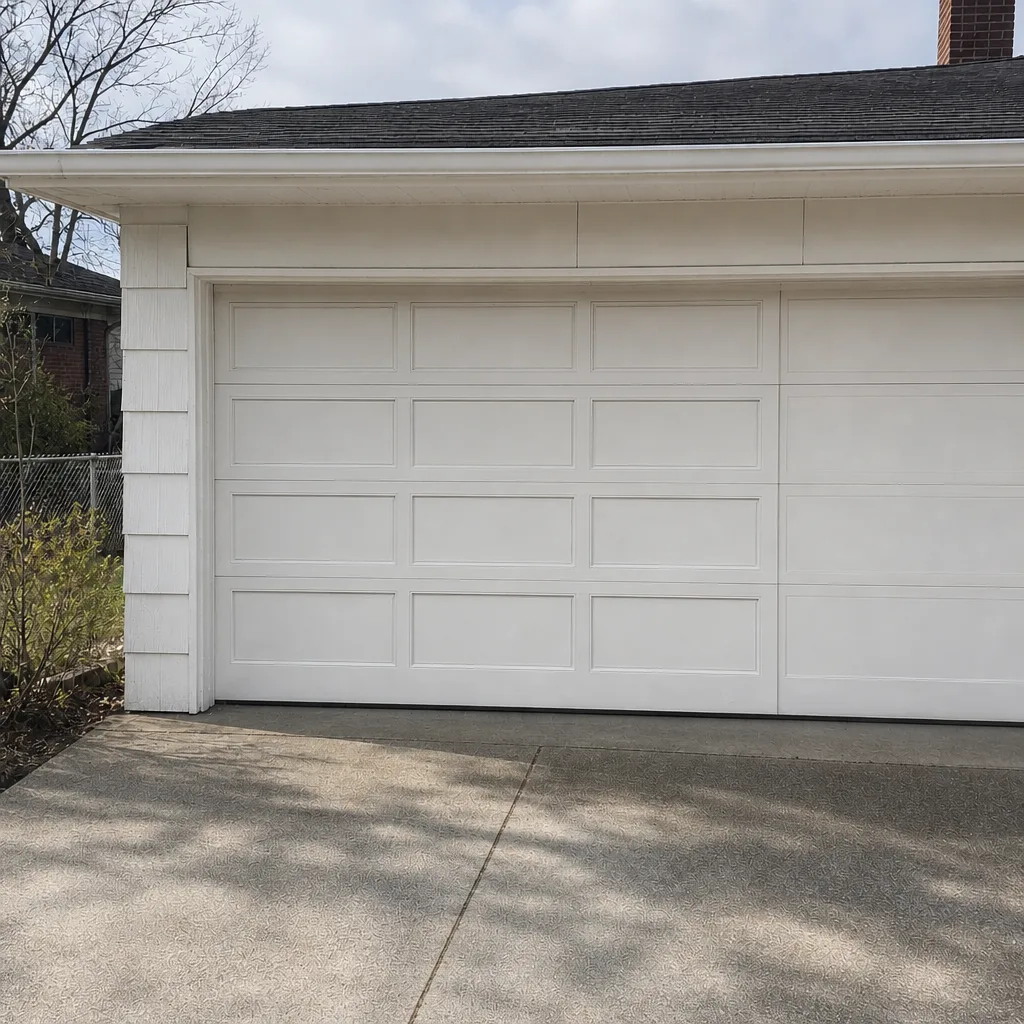
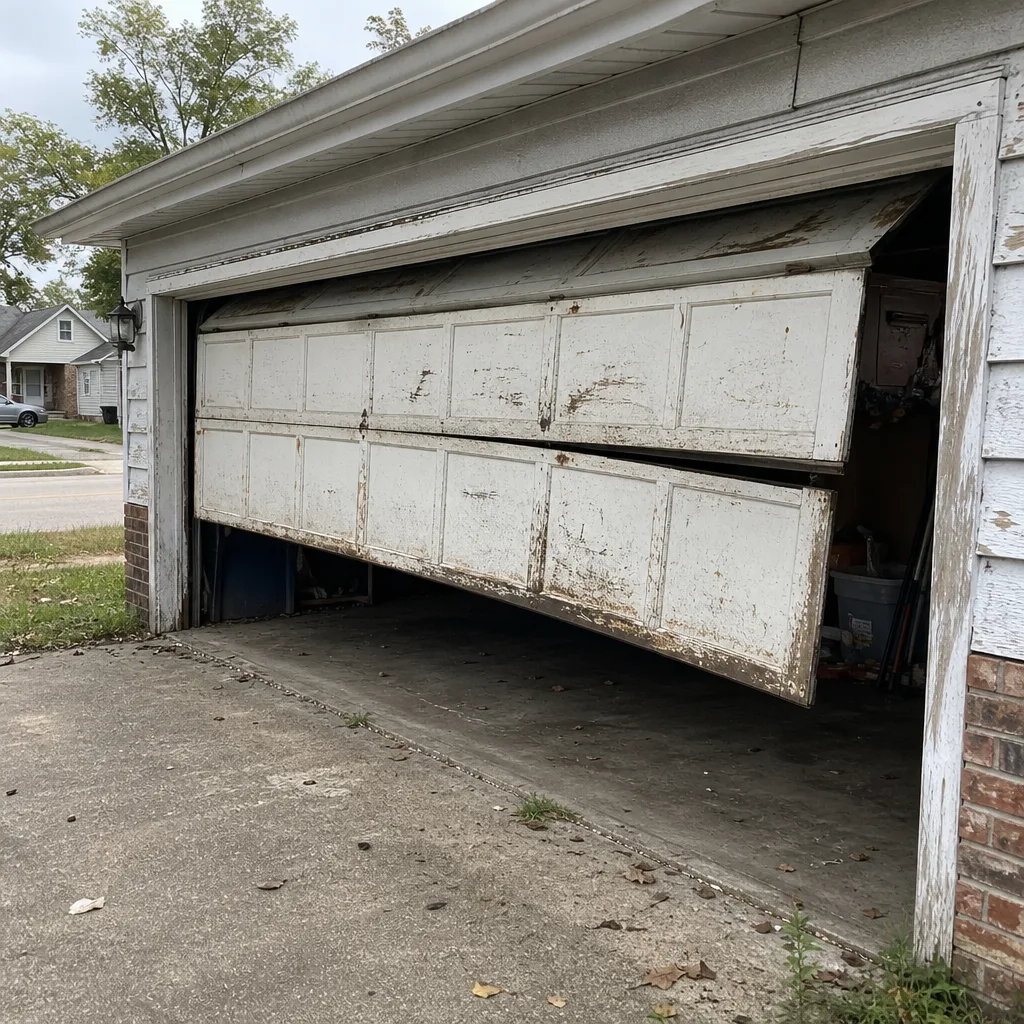
See the difference
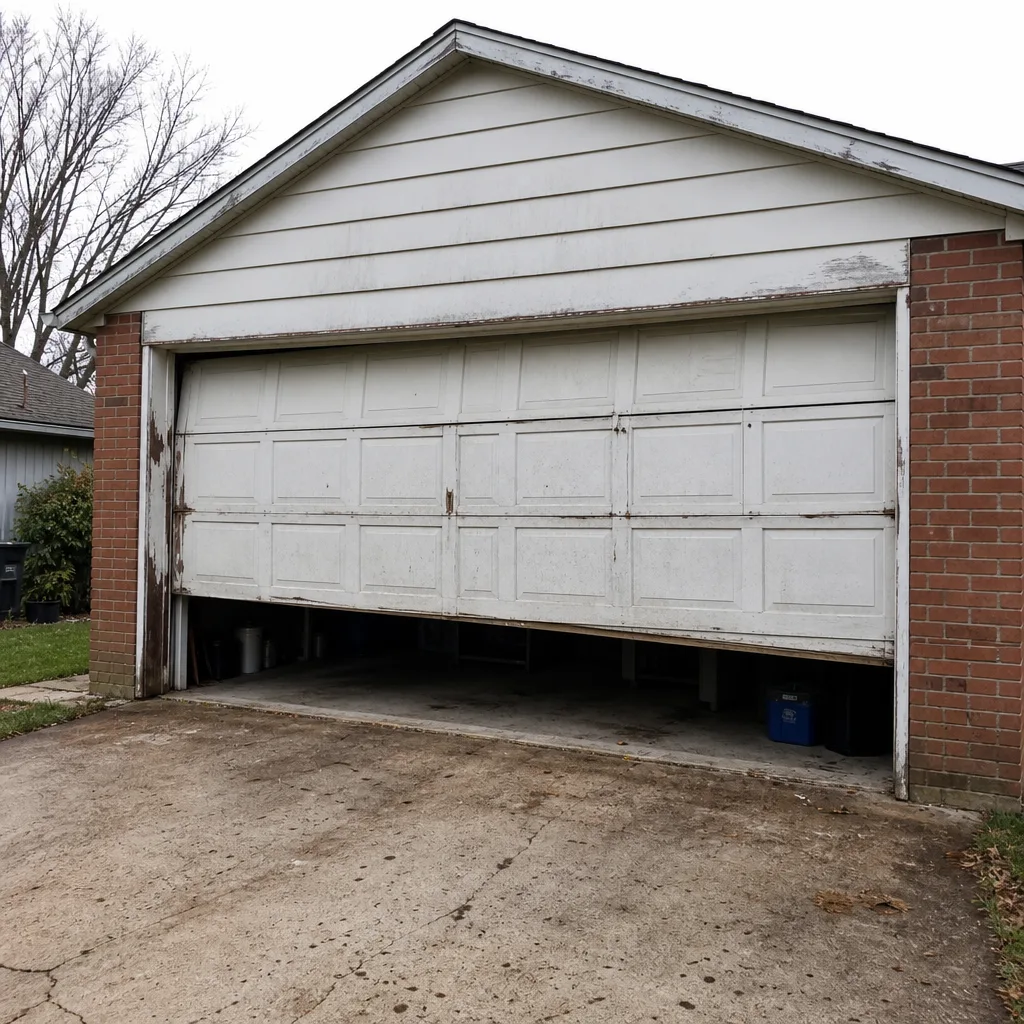 Before
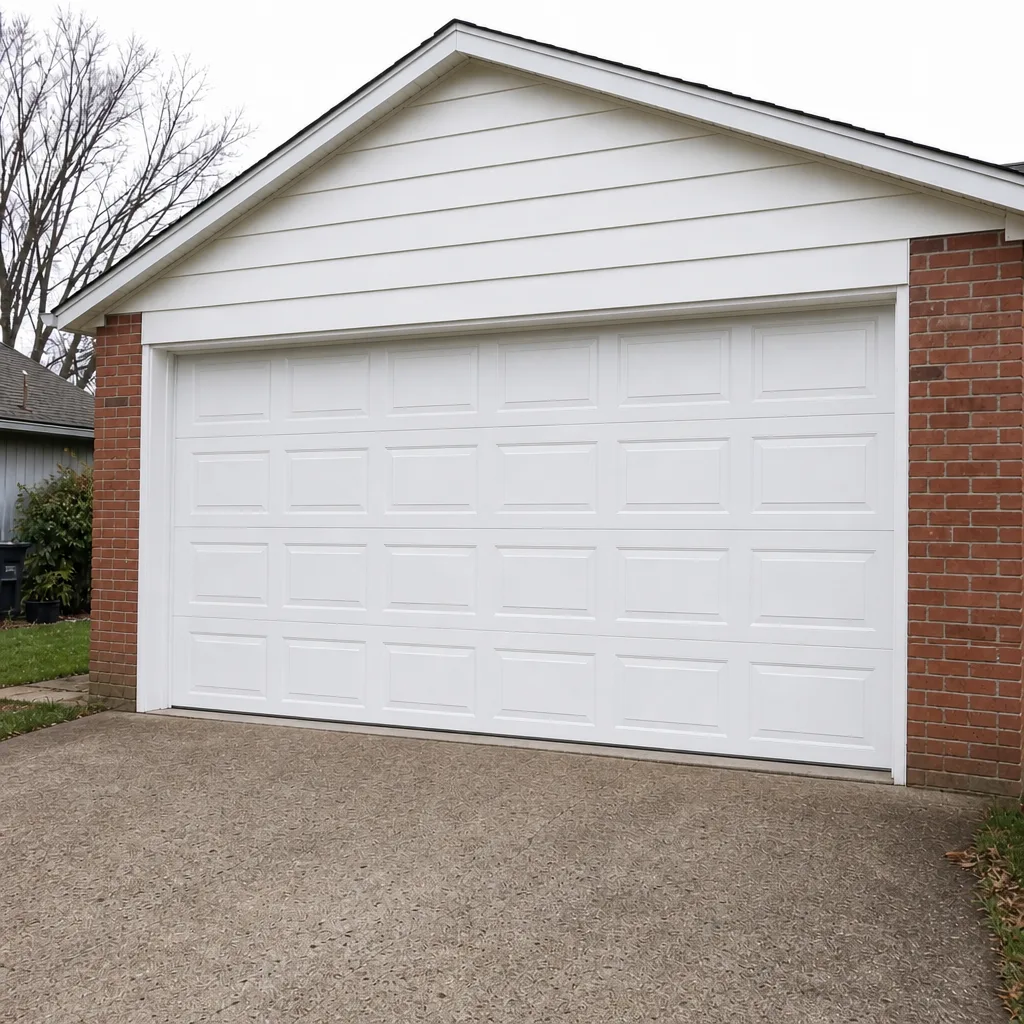 After
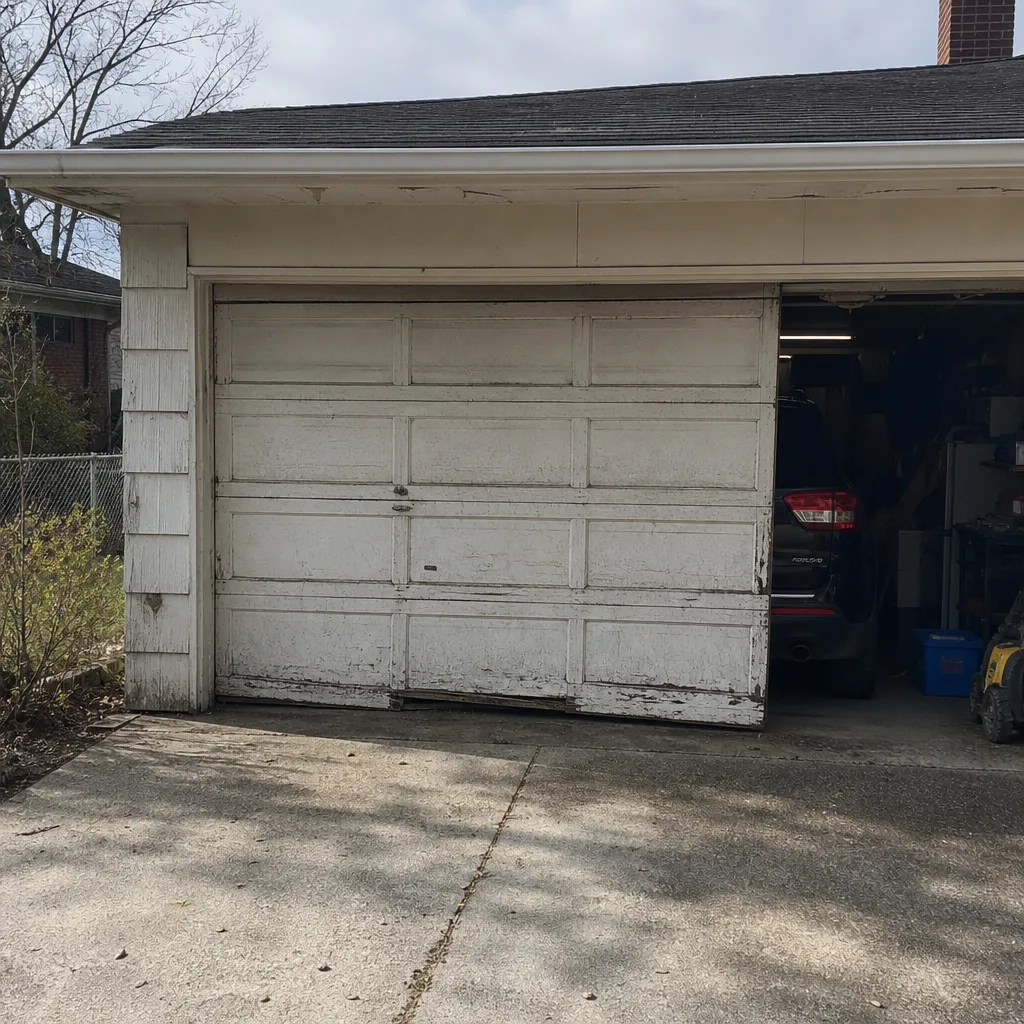 Before
 After
 Before
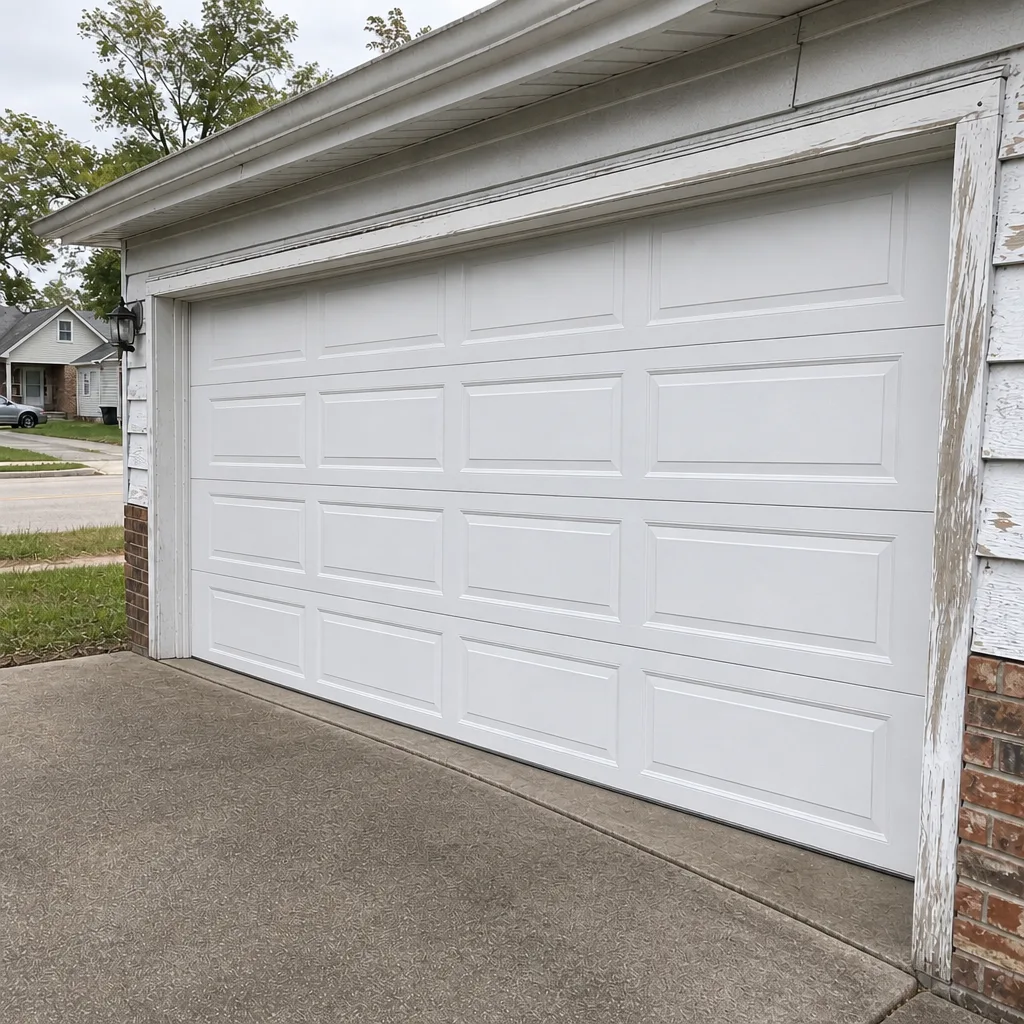 After
When to Call a Professional
Call a professional when a warning sign involves springs or cables, when two or more warning signs appear at the same time, when the door fails a balance test, or when the door stops sealing evenly. Call immediately if the door has come off its tracks, if a spring has broken, or if you smell exhaust in the house. For noise or movement issues that aren’t on the stop-using-the-door list, a standard appointment is usually enough, though we do offer emergency service for the urgent cases because a stuck door can trap a car or leave a home unsecured. We work on LiftMaster, Chamberlain, Genie, Clopay, Amarr, Wayne Dalton, Craftsman, and Raynor systems, so the brand on your garage door isn’t a reason to call someone else. Garage Door Repair Fairfield Pros offers free estimates in Fairfield – call (844) 440-7065.
Frequently Asked Questions
A broken torsion spring or a frayed cable is the most serious warning sign, and either means stop using the door immediately. The door may still lift, especially with the opener’s assistance, but the system is no longer safe to operate. Keep the door closed and call for service rather than testing it again.
No. Torsion and extension springs are under extreme tension, and the tools needed to handle them safely are specialized. Spring work is technician-only; it’s the part of any garage door that causes the most serious injuries. We handle springs as a dedicated service for exactly that reason.
Grinding is sometimes a small lubrication issue and sometimes a sign of worn rollers, a misaligned track, or a failing bearing. To tell which, look at the rollers and tracks while the door moves; if a roller looks dry, flat-spotted, or wobbles, that points to the cause. A grinding noise that’s accompanied by the door pulling to one side should be checked by a technician.
A door reversing for no reason is usually a safety sensor issue. Check that nothing is in the door’s path and that both sensors are aligned and lit; if they look fine, the problem is likely in the opener’s travel limits or logic board. Chamberlain and Genie openers handle these settings differently, which is where a technician’s experience with the brand helps.
Repair usually makes sense when the door’s panels are sound and the problem is springs, hardware, or the opener. Replacement is worth considering when panels are cracked or dented, the door is out of balance despite repair attempts, or repair costs are climbing toward a new door. An in-person look gives you a clearer answer than symptoms alone.
Often, yes. Fairfield’s humid summers and cold winters work wood and steel differently, so a door that’s quiet in July can grind in January as lubricant thickens and metal contracts. A seasonal pattern is useful diagnostic information; mention it when you call and it helps narrow down the cause.
The Bottom Line
Garage doors rarely fail without warning. What fails is the homeowner’s ability to tell a small warning sign from a serious one, because most advice stops at the sound and doesn’t connect it to what else the door is doing. Read the four categories together, noise, springs and cables, movement, and hardware, and you’ll catch most problems early. The stop-using-the-door list is short: a broken spring, a frayed cable, an uneven door, track damage, or a door hanging off its tracks. For those, close the door and call. For anything else, a five-minute monthly check and a call when something’s new will get you years more life out of the door.
If you’ve spotted a warning sign at your Fairfield home and want a professional verdict, call (844) 440-7065 for a free estimate. We’ll look at the sound, the movement, the springs, and the hardware together and tell you plainly what needs attention and what can wait.
Written by the team at Garage Door Repair Fairfield Pros.